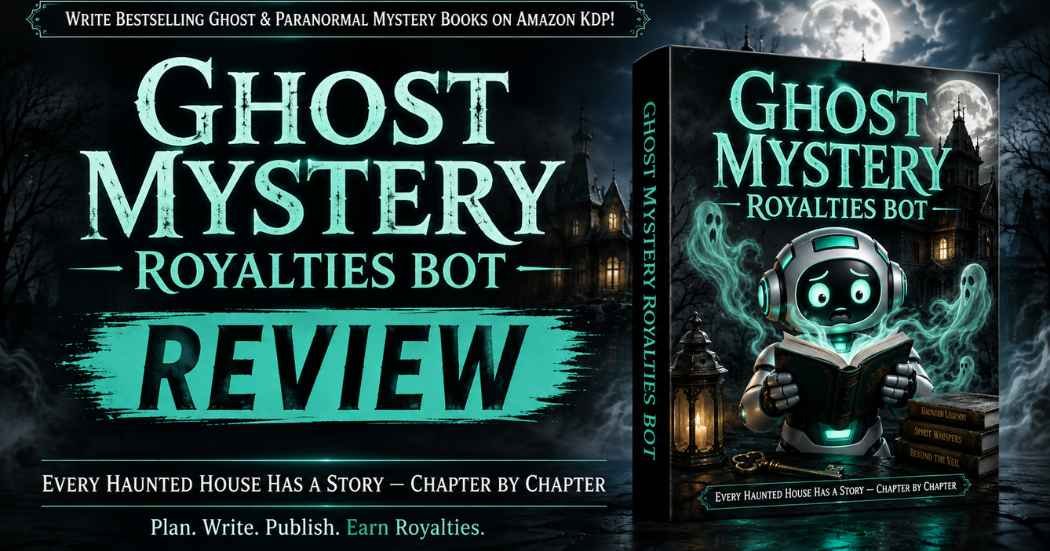
If you’ve spent any time in the KDP self-publishing world, you already know the drill. Everyone’s chasing the next niche that’s easy enough to write with AI but still sells. Ghost, paranormal, and mystery fiction keeps showing up on that list, and that’s exactly the space this tool was built for.
This Ghost Mystery Royalties Bot Review breaks down what the product actually includes, how the ChatGPT-based workflow is supposed to work, what it costs, and who’s genuinely likely to get value out of it. Everything here comes from the official product information available at the time of writing. Nothing in this review is based on hands-on testing, and I’ll say so clearly wherever that distinction matters.
Our Overall Rating
Based on the available product information, Ghost Mystery Royalties Bot earns a solid rating for what it’s trying to do: turn a blank ChatGPT window into a guided path from story idea to a KDP-ready manuscript and its supporting assets.
Category | Rating |
Features | 9/10 |
Writing Workflow | 9/10 |
Ease of Use | 8.5/10 |
KDP Support | 8.5/10 |
Customization | 8/10 |
Value for Money | 8.5/10 |
Overall | 8.5/10 |
The strongest part of this offer isn’t any single feature. It’s that story development, chapter drafting, and publishing prep all live under one workflow instead of being scattered across a dozen separate prompts you’d otherwise have to write yourself. The obvious catch: it’s built for one niche. If ghost, paranormal, or mystery fiction isn’t your thing, most of that value disappears.
What You Get With the Purchase
The front-end offer is a ChatGPT-based system, not a standalone app you install. You’re paying for a structured set of prompts and instructions that guide the bot through each stage of writing and publishing a paranormal mystery novel.
Here’s what’s included:
- The Ghost Mystery Royalties Bot itself, built for use inside ChatGPT
- A four-phase guided writing workflow
- Story Bible creation for tracking characters, setting, and plot
- Chapter-by-chapter drafting assistance
- Seven Amazon backend keyword suggestions
- Amazon book description generation
- AI-generated book cover creation (via DALL-E)
- Pen-name generation
- Author-persona generation
That’s a fairly complete publishing bundle for the price, at least on paper. Whether each piece holds up in practice depends heavily on how much editing and judgment the author brings to it.
Who Created Ghost Mystery Royalties Bot?
Honestly, this is one of the murkier parts of the offer. The product materials focus almost entirely on describing the workflow and the funnel itself, without much said about who built it or their track record with previous launches.
I’m not going to guess at a name, a company, or a background here, because the available information simply doesn’t support it. If creator reputation matters to you before you buy, that’s a reasonable thing to want, and it’s worth doing your own search for reviews, refund experiences, or launch history before purchasing.
What I can say is this: without verified creator details, it makes sense to judge the product mainly on what it claims to deliver, its price, and how well that fits your own publishing goals, rather than on trust built from a known track record.
What Makes This Bot Different?
Open a blank ChatGPT chat and ask it to “write a ghost story” and you’ll get something. It just won’t be structured, and you’ll spend a lot of time reinventing prompts you could have reused. That’s the gap this tool is trying to close.
Instead of generic instructions, the workflow is built specifically around paranormal and mystery conventions: hauntings, investigators, clue placement, and the kind of reveal that needs to feel earned rather than random. That specialization is really the whole pitch behind this Ghost Mystery Royalties Bot review ecosystem.
It also doesn’t stop at the manuscript. Most AI writing prompts hand you a chapter and leave you to figure out keywords, covers, and descriptions on your own. This one folds those publishing steps into the same process.
What stands out most:
- Niche-specific prompt design instead of generic story generation
- A defined four-phase structure rather than an open-ended chat
- A Story Bible meant to keep characters and plot consistent
- Chapter-by-chapter drafting instead of one massive prompt
- Built-in KDP prep: keywords, description, cover, and branding
Inside the ChatGPT Experience
Since everything runs through ChatGPT, there’s no new interface to learn. You’re typing into the same chat window you’d normally use, just with a much more structured set of prompts guiding what happens next.
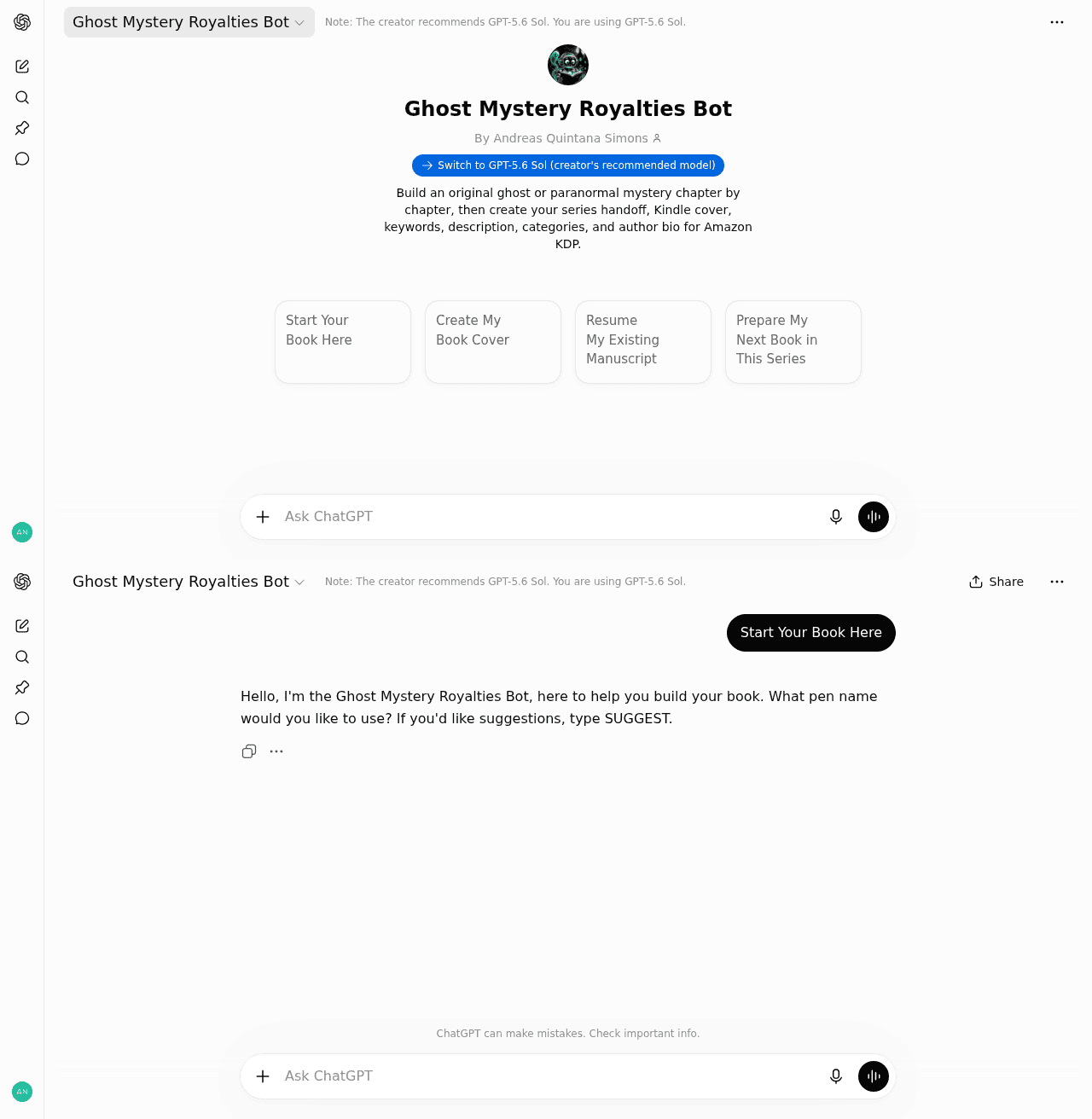
That structure is genuinely useful if you’ve ever stared at a blank chat trying to figure out where to even start a novel. Instead of jumping straight to “write chapter one,” the process is meant to walk you through concept and planning first, which tends to produce a more coherent result than diving straight into prose.
That said, it’s still ChatGPT underneath. The output quality depends on the instructions you give it, the choices you make along the way, and how much you’re willing to revise. Treat it as a drafting partner, not a system that removes your creative judgment from the equation.
Starting a New Mystery Project
A mystery novel gets a lot easier to manage once the core idea is nailed down before you start writing chapters. The workflow is built around that principle rather than throwing you straight into drafting.
A typical progression through the system looks like this:
- Establish the book’s basic concept
- Develop the central mystery
- Create the key characters
- Define the paranormal elements
- Build out the Story Bible
- Plan the chapters
- Develop the full manuscript
- Prepare the supporting KDP materials
The real benefit here is organizational. You’re not staring at a blank page trying to invent an entire novel in one sitting. You’ve got a framework to work from before the heavy drafting begins.
Developing the Main Story Idea
A ghost in a haunted hotel isn’t a mystery on its own. It’s just a setting. What turns it into a story readers want to finish is the question underneath it: why is the ghost there, what happened, and who’s hiding what.
The bot is meant to help expand a bare-bones idea into something with actual stakes by working through elements like the central mystery, the investigator, the setting, and the supernatural situation driving the plot. A one-line pitch about a woman discovering a ghost can turn into a fuller premise involving buried history and a reason someone doesn’t want the truth uncovered.
Here’s the part worth remembering: AI can help you stretch an idea, but it can’t tell you whether that idea is actually good. That judgment call stays with you.
Building the Characters
Mystery fiction lives or dies on its characters, mainly because readers need someone whose investigation they actually want to follow. A flat protagonist sinks an otherwise clever plot fast.
The system is designed to help organize the cast around roles like:
- The investigator
- Supporting characters
- Suspects
- Background players who move the plot along
For each of these, useful development areas typically include background, motivation, personality, relationships, secrets, and how they connect to the central mystery. Planning that out ahead of time helps prevent the common problem of characters showing up simply because the next chapter needs a body in the room.
Where this can fall short: AI-generated character sketches sometimes lean predictable. Add your own quirks, contradictions, and specific details, because that’s usually what separates a memorable character from a placeholder.

Designing the Paranormal Elements
Ghost and paranormal fiction runs on atmosphere just as much as plot. Readers show up for the eerie hallway, the unexplained cold spot, the sound that shouldn’t be there.
Since the tool is built specifically around this genre, it’s meant to help develop hauntings, unexplained events, supernatural clues, and atmospheric details that fit the story rather than feeling bolted on. Getting these elements planned early matters more than it might seem.
The reason is consistency. If the supernatural rules of your world shift halfway through the book, readers notice, and it breaks trust in the story. Deciding upfront how the haunting behaves and why it’s connected to the mystery keeps the whole thing coherent as the chapters pile up.
Structuring the Mystery
Every solid mystery runs on the same basic ingredients: questions, clues, obstacles, and eventually an explanation that makes sense of everything that came before it. Structuring these before drafting begins tends to produce a much tighter final story.
The guided process is meant to help authors think through pacing here, gradually revealing information while keeping enough unanswered questions alive to hold suspense chapter after chapter.
Here’s the part I’d flag for extra attention: every major reveal needs to trace back to something planted earlier. If the solution seems to come out of nowhere, readers feel cheated, no matter how polished the writing is elsewhere. That’s a logic check no AI tool can fully do for you.
Planning the Twist and Reveal
The ending is where a mystery novel earns its keep. Get it right and readers finish the book satisfied. Get it wrong and the whole story feels like it wasted their time.
Planning that reveal well means thinking through:
- Where clues should appear
- What readers are meant to believe along the way
- What details stay hidden until the end
- How the final explanation ties back to earlier chapters
AI can be genuinely useful here for brainstorming multiple possible twists, since generating options fast is one of its actual strengths. The final choice still belongs to you. A good twist needs to surprise readers in the moment and then feel completely believable once they look back at the clues, and that balance is a judgment call, not a formula.
Turning the Plan Into a Full Manuscript
Ghost Mystery Royalties Bot generating a complete Chapter 1 from the developed story plan.
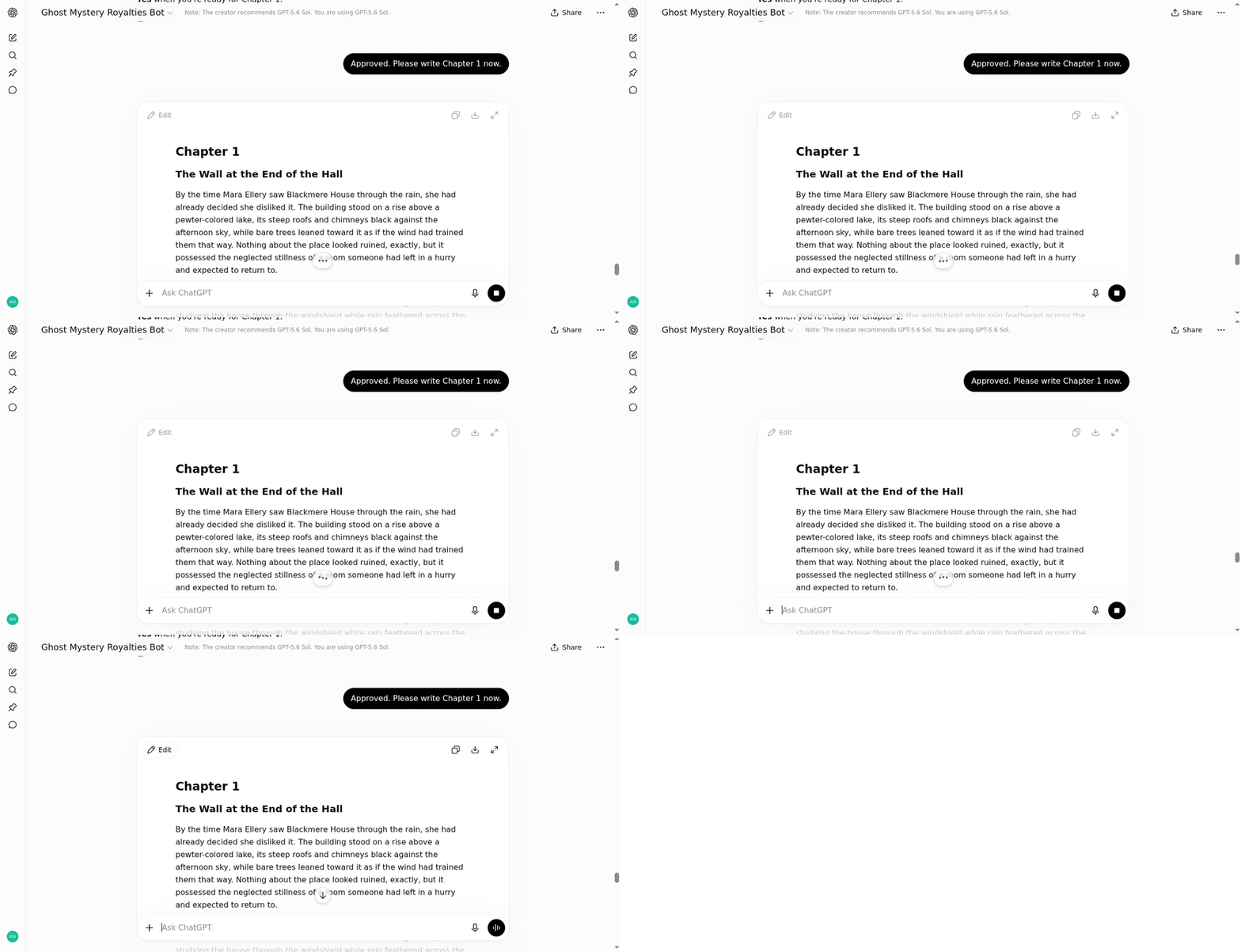
Once the framework exists, the next hurdle is actually writing the thing. The chapter-by-chapter approach is meant to make this less intimidating, since you’re not trying to solve the entire novel in one sitting.
Instead, the story moves forward chapter by chapter while sticking to the direction set during planning. That structure genuinely helps with pacing and keeping the project from stalling out.
It doesn’t remove the need for supervision, though. Long-form AI writing tends to develop its own problems over enough pages: repeated phrasing, continuity slips, characters who act out of pattern, and a narrative voice that drifts. Budget real time for editing, because that stage isn’t optional.
Creating Supporting KDP Materials
One thing this offer does better than a lot of generic writing prompts is that it doesn’t stop once the manuscript is done. Publishing on Amazon needs more than a finished story, and the workflow tries to cover that ground too.
Included publishing assets:
- Backend keyword ideas
- Amazon book description
- AI-generated cover
- Pen name
- Author persona
That’s a genuinely useful bundle for someone who’d otherwise be piecing these steps together from scratch. Just don’t treat any of it as finished on the first draft. Every one of these outputs needs a human review pass before it goes anywhere near your Amazon listing.
Amazon Keyword Strategy
The offer includes seven Amazon backend keyword suggestions based on buyer-intent search terms. For a new KDP author, that’s a reasonable starting point, since figuring out keyword strategy from zero can be genuinely confusing.
What actually matters here is relevance. A keyword only helps if it accurately describes your book and matches the readers you’re actually trying to reach, not just a term that sounds related.
A few things worth checking before you use any suggested keyword:
- Does it actually match your book’s plot and tone?
- Is it specific enough to reach the right readers?
- Have you sanity-checked it against Amazon’s own search results?
One honest limitation: the tool can generate keyword ideas, but it can’t guarantee visibility or ranking on Amazon. Nothing can. Treat the suggestions as a starting list to verify, not a finished strategy.
Book Description Strategy
A manuscript’s job is to tell a story. A book description has a completely different job: convince someone scrolling Amazon to click “buy” or at least “read sample.” Those are different writing skills.
The bot is meant to draft an initial description built around your story’s mystery, characters, setting, and hook, which at least gives you a working starting point instead of a blank text box.
The catch is that a good description has to stay accurate to the actual book while still creating curiosity, and generic AI phrasing tends to undercut both goals. Before publishing anything, strip out vague language, double-check every claim against what’s actually in the book, and make sure the tone matches your genre’s conventions.
AI Cover Creation Experience
The offer includes cover image generation using DALL-E inside ChatGPT, which is a genuinely handy way to explore visual concepts fast: haunted houses, foggy streets, shadowy figures, that kind of atmosphere.
Here’s the limitation worth understanding upfront. Generating an appealing image is not the same thing as producing a finished, professional book cover. Those are different skill sets entirely.
Things that still need real attention after the AI image is generated:
- Typography and title placement
- Author name presentation
- Genre-appropriate cover conventions
- Amazon KDP’s technical cover specifications
I’d treat this feature as a concept and brainstorming tool rather than a finished-product generator. Budget for either your own design pass or a freelance designer before it goes live on Amazon.
Author Branding and Pen Name Tools
Plenty of paranormal and mystery authors don’t want to publish under their real name, and that’s exactly what the pen-name and author-persona tools are built for.
A well-chosen pen name can help establish a recognizable identity tied to a specific genre, which matters more than people expect once you’re trying to build a backlist readers recognize. The author-persona feature is meant to support that same consistency across your author bio and branding.
One practical note: don’t treat this as fully solved by AI. Before committing to any generated pen name, check that it isn’t already in heavy use by another author and that it fits how you actually want to present yourself long term.
Beginner Experience
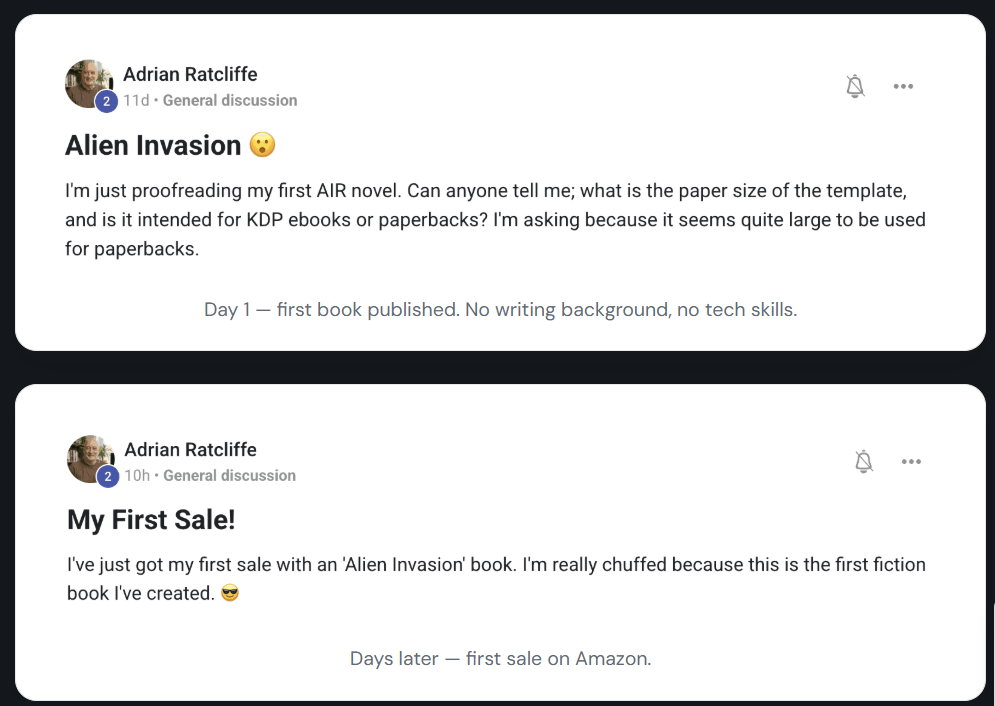
For someone brand new to KDP fiction, the biggest win here is probably structure. Knowing you want to write a paranormal mystery and knowing how to actually organize that process are two very different problems.
What beginners can expect:
- A manageable learning curve if you already know basic ChatGPT use
- A defined workflow instead of a blank chat window
- Guided prompts at each stage rather than needing to write your own
The catch: a guided tool doesn’t replace the need to understand basic story structure and editing. It makes the process easier to start, not effortless to finish. Beginners will still need to develop an eye for what’s working and what isn’t.
Time-Saving Potential
The clearest time savings come from not having to build your own prompts for every single stage of the project. Story concepts, character sheets, mystery structure, chapter outlines, keywords, descriptions, cover ideas: normally that’s a dozen separate prompt-writing sessions.
Having all of that organized into one workflow removes a real chunk of setup and planning work before you even start drafting.
That said, I wouldn’t promise a specific number of hours saved, because that depends entirely on your experience level and how much editing you personally require. What it can reliably do is give you a starting point instead of a blank page, and for a lot of writers, that’s the hardest part to get past.
Creative Control
An AI writing tool is only worth using if you can still steer the story yourself. This system is positioned as a guided assistant rather than something that runs on autopilot, which matters a lot for genre fiction where creative choices are hard to automate well.
You’re still the one deciding the direction of the mystery, how characters behave, and which twist actually lands. The bot generates options and drafts; you decide what stays.
The best way to use something like this is probably as a brainstorming and drafting partner, while you keep final say over voice, pacing, and the choices that make the book actually yours.
Content Customization
Every story built with this system can be shaped around your own concepts, characters, paranormal elements, mystery structure, and writing direction rather than a fixed template.
Areas you can customize:
- Story concept and setting
- Character backgrounds and motivations
- Type and behavior of paranormal elements
- Mystery structure and clue placement
- KDP materials like keywords and description
The more specific your instructions, the further you can push the output away from generic patterns. Even with detailed prompts, though, AI-generated content can still fall back on familiar tropes. If you want a genuinely distinctive book, plan on revising rather than publishing the first draft as-is.
Strengths for Fiction Authors
A few things genuinely stand out here for fiction writers specifically, rather than generic AI benefits that apply to any writing task:
- Niche specialization: built specifically around ghost and paranormal mystery conventions, not generic fiction prompts
- Structured workflow: a defined path instead of starting from a blank chat
- Story Bible tracking: helps keep characters and plot elements consistent across chapters
- Chapter-by-chapter drafting: makes long-form writing feel manageable instead of overwhelming
- KDP prep included: keywords, description, and cover work are part of the same process
- AI cover generation: fast way to test visual concepts before committing to a design
- Author branding tools: pen name and persona support for writers who don’t want to publish under their real name
The real value is the combination of all of these working together, rather than any one feature being remarkable on its own.
Limitations to Consider
No AI writing tool is without tradeoffs, and this one has a few worth knowing before you buy:
- Narrow niche focus: the whole system is built around ghost, paranormal, and mystery fiction, so it won’t help much outside that lane
- AI prose still needs editing: nothing generated should be treated as publication-ready on the first pass
- Originality depends on you: the author has to add distinctive creative choices, or the story risks feeling generic
- Continuity checking is manual: long manuscripts can develop inconsistencies that need a careful read-through
- Cover limitations: DALL-E images typically need further design work before they’re KDP-ready
- Keyword suggestions aren’t guarantees: they need independent verification, not blind use
- Publishing responsibility stays with the author: you’re accountable for the final content, no matter how it was drafted
None of these are dealbreakers by themselves. They’re just things a buyer should walk in knowing.
Best Genres and Sub-Niches
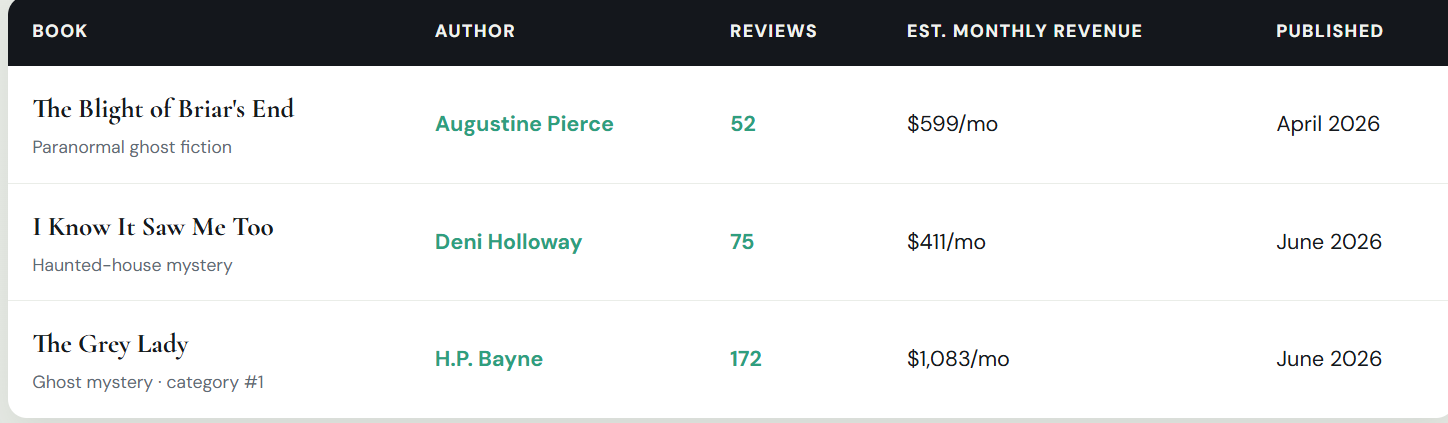

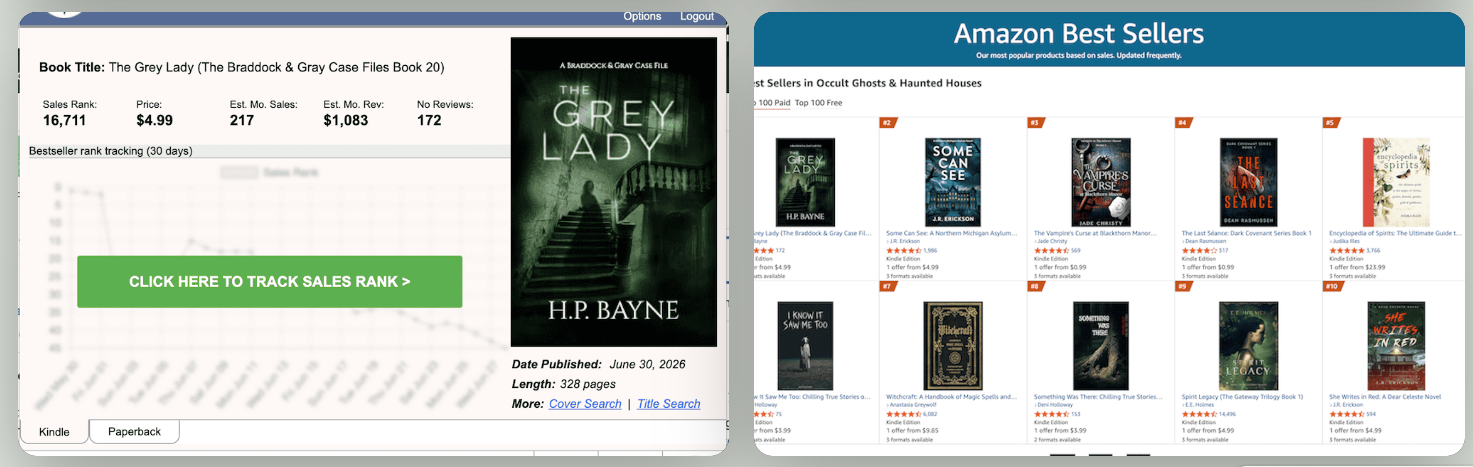
Given how the workflow is built, it makes the most sense for authors already working in or interested in the paranormal side of fiction.
Genres that fit naturally:
- Ghost stories
- Paranormal mysteries
- Supernatural mysteries
- Haunted-location fiction
- Occult mystery fiction
- Suspense with supernatural elements
If your project sits comfortably in one of these lanes, the specialized prompts are going to do a lot more heavy lifting for you. On the flip side, if you’re writing romance, business nonfiction, or something unrelated entirely, a general-purpose AI writing tool is probably a better fit than this one.
Pricing and Purchase Options
The verified front-end price for Ghost Mystery Royalties Bot is $17.88 USD.
| Item | Price |
| Ghost Mystery Royalties Bot (core offer) | $17.88 |
At that price, you get the core bot along with the full workflow: story development, chapter drafting assistance, and the supporting KDP materials covered earlier in this review.
The more useful question isn’t whether $17.88 counts as cheap. It’s whether you actually need a workflow this specific. If ghost and paranormal mystery fiction is genuinely your lane, that specialization is probably worth more to you than a stack of generic writing prompts you’d have to adapt yourself.
OTOs: What Are the Upgrades?
Like most funnels in this space, the front-end purchase comes with a handful of upsells.
OTO | Price | What It Adds |
100 Premium Ghost Mystery Prompts | $27 | Additional niche-specific prompts |
200 Premium Ghost Mystery Prompts | $37 | Larger prompt collection |
Publishing Success Accelerator (Monthly) | $38/month | Ongoing publishing-focused resource |
Publishing Success Accelerator (Yearly) | $380/year | Annual version of the same offer |
AI Sales Rocket | $97 | Additional AI sales-focused tools |
None of these read as essential for using the core bot. The prompt-pack upgrades make sense mainly if you’re planning to publish multiple books in this niche and want more variety without writing your own prompts. The Publishing Success Accelerator and AI Sales Rocket sit further outside the core writing workflow, and I’d treat them as optional add-ons rather than something you need to grab on day one.
My honest suggestion: buy the front-end offer first, actually use it, and only come back for an OTO once you know it solves a specific problem you’ve run into.
Who Gets the Most Value?
Based on everything covered so far, certain readers are more likely to see real value here than others:
- New KDP fiction authors who want a structured starting point
- Writers specifically drawn to ghost and paranormal mystery fiction
- Authors who already use ChatGPT and are comfortable with prompt-based tools
- Writers who struggle with organizing or starting longer projects
- Anyone who wants writing and KDP prep bundled into one workflow
- Self-publishers looking for niche-specific rather than generic AI assistance
- Fiction writers who are genuinely willing to edit AI-generated drafts
The closer your goals line up with that list, the more this tool is likely to earn its price.
Is Ghost Mystery Royalties Bot Worth Buying?
At $17.88, this isn’t a purchase that requires much financial risk tolerance. The real question is fit, not affordability.
If your goal is producing ghost, paranormal, or mystery fiction for KDP, the combination of a structured workflow, Story Bible planning, chapter drafting, and built-in publishing assets is genuinely more complete than most single-purpose AI writing prompts on the market. That’s the strongest argument in its favor.
Where it falls short of being an automatic yes: it’s still a ChatGPT-based tool, which means the final quality depends heavily on your own editing, revision, and creative judgment. Nothing here removes that work. It organizes it.
Pricing-wise, the front-end offer is reasonable for what it includes, and I wouldn’t recommend grabbing every OTO just because they’re presented in the funnel. Start with the core product, see if the workflow actually fits how you write, and decide on upgrades from there.
Overall, this is a reasonable pick for the specific author it’s built for, and a skippable one for anyone outside that niche.
Final Thoughts
The strongest reason to consider Ghost Mystery Royalties Bot is the way it ties together story planning, drafting, and KDP prep instead of treating them as separate problems you’d normally solve with a pile of unrelated prompts.
The biggest limitation is baked into that same specialization. If you’re not writing in the ghost, paranormal, or mystery space, most of what makes this tool useful just doesn’t apply to you.
Quick verdict:
- Best for: Ghost, paranormal, and mystery KDP authors
- Biggest strength: A structured, niche-specific workflow
- Biggest limitation: Still requires real editing and creative input from the author
- Front-end price: $17.88
- Overall take: A genuinely useful starting framework for the right author, not a shortcut to guaranteed sales
If paranormal mystery fiction is where you’re already headed, this is worth a closer look. Just go in treating it as a drafting and planning assistant, not a promise of royalties or bestseller status. No tool, AI or otherwise, can guarantee that.
Frequently Asked Questions
What is Ghost Mystery Royalties Bot?
It’s a ChatGPT-based writing system built specifically for ghost, paranormal, and mystery fiction. It guides authors through story development, chapter drafting, and several Amazon KDP-related tasks.
Is Ghost Mystery Royalties Bot designed for Amazon KDP?
Yes. The product is built specifically with KDP authors in mind, and it includes backend keyword suggestions and Amazon book description generation as part of the core offer.
Is it a standalone writing application?
No. It runs through ChatGPT rather than as its own separate app or piece of software.
What does the $17.88 offer include?
The front-end purchase includes the core bot, the four-phase guided workflow, Story Bible creation, chapter drafting assistance, seven KDP keyword suggestions, book description help, AI cover generation, and pen-name and author-persona tools.
Can it write an entire mystery book?
It’s designed to assist with developing and drafting a book chapter by chapter. Authors still need to review, edit, and refine everything before it’s ready to publish.
Does it generate Amazon keywords?
Yes, it provides seven backend keyword suggestions based on buyer-intent search terms. You should still verify these against your book’s actual content before using them.
Can it create a book description?
Yes. It drafts an initial Amazon book description, which should be reviewed and customized to match your finished book accurately.
Can it generate a book cover?
Yes, using DALL-E inside ChatGPT. The result should be treated as a concept starting point, since typography and final KDP formatting usually still need extra design work.
Are the OTOs required?
No. The OTOs are optional add-ons in the sales funnel. Evaluate each one based on whether you actually need the extra prompts or resources.
How much editing will an AI-generated book need?
That depends on your own quality standards and the output you get. Expect to do developmental editing, continuity checks, and proofreading at minimum before publishing.
Who is Ghost Mystery Royalties Bot best suited for?
Authors specifically interested in ghost, paranormal, supernatural, or mystery fiction who want a structured AI-assisted process for both writing and KDP preparation.
Is Ghost Mystery Royalties Bot worth buying?
For authors in its target niche, the $17.88 front-end offer is reasonable given how much it bundles together. Just remember that human editing, creative judgment, and quality control are still essential no matter what the tool generates.